

FC3R: Can you introduce yourself and tell us about your background?
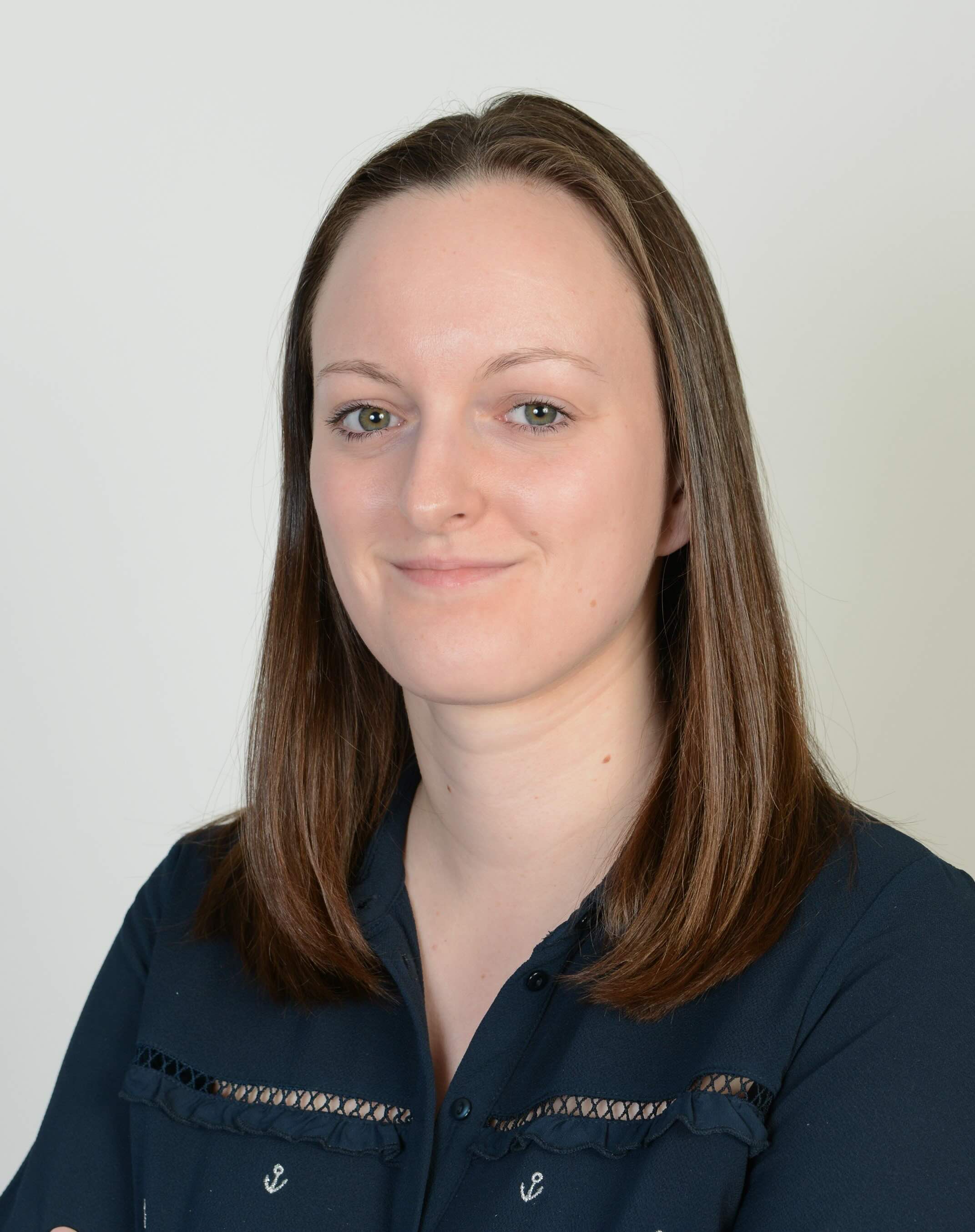
I am a postdoctoral researcher at the Cancer Research Centre of Lyon (CRCL), at the Léon Bérard Centre, in the "Cell States and Childhood Cancers" team, co-led by Dr Marie Castets and Prof. Jean-Yves Blay. We work specifically on paediatric cancers, especially sarcomas and brain tumours.
During my PhD at the Blood-Brain Barrier Laboratory in Lens, I developed 2D multicellular in vitro models to study interactions between blood-brain barrier cells and diffuse intrinsic pontine glioma (DIPGF), a highly aggressive paediatric brain cancer. I then wanted to take my modelling of paediatric brain tumours a step further by joining Dr Laura Broutier's group at CRCL for my postdoctoral research. Since then, I have been working on the development of 3D tumour organoid models, also known as tumoroids, of high-grade paediatric gliomas, including DIPG.
These tumoroid models allow us to apply the 3Rs principle, as we do not use animals to model and study these particular tumours.
FC3R: Can you tell us about the award-winning work?
Childhood cancers are rare, accounting for only about 1-2% of all cancers. However, they remain the leading cause of disease-related death in children. Although up to 80% of children with cancer can now be successfully treated, some cancers, such as high-grade gliomas and posterior fossa ependymomas, remain extremely difficult to cure.
One reason for this is partly due to the heterogeneity of these tumours. There are several subtypes of high-grade gliomas, which is known as inter-tumour heterogeneity. There is also intra-tumour heterogeneity, meaning that there are several cell populations coexist within the same tumour, and some of these populations will be resistant to treatment.
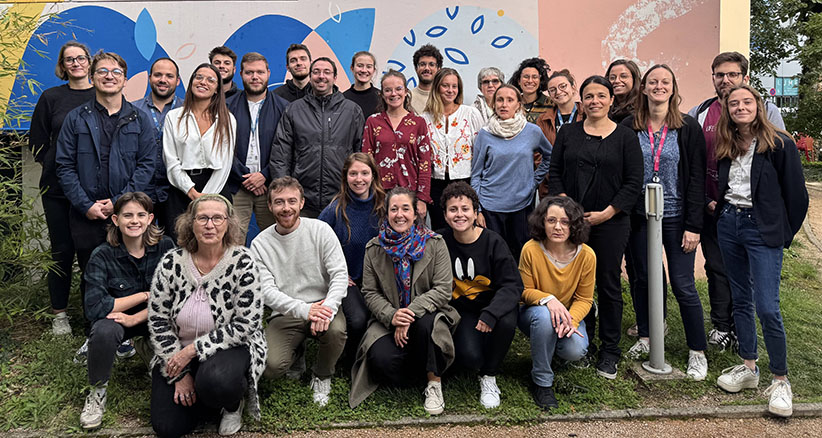
It is in this context that I have developed, in close collaboration with Arthur Tourbez, co-first author of the paper, tumoroid models of the deadliest paediatric glial tumours, i.e. high-grade paediatric gliomas, including DIPG, and posterior fossa ependymomas. Tumoroids are mini-avatars versions of tumours that we generate in vitro in the laboratory. These models accurately represent the heterogeneity of the original tumours and allow us to identify which treatments, or combinations of treatments, are most effective.
I would also like to emphasise that this work is the result of a team effort, and I would like to thank everyone involved.
FC3R: How are these organoid models generated? From biopsies or from human embryonic stem cells?
We collaborate with Dr. Pierre Leblond, a paediatric oncologist at IHOPe, as well as surgeons and anatomopathologists at the Hospices Civils de Lyon, who give us access to biopsy samples and surgical resections. Even from small tumour fragments, we are able to establish tumoroid cultures using the protocols we have developed, thereby expanding the starting material. These models can be cultured stably for months, or even years, and can be frozen and thawed as needed for our projects.
FC3R: It is often said that organoids are not as "mature" as the original tissues in adults. Is this also the case for your tumoroids?
We have carried out a very comprehensive characterisation of our tumoroid models at the histological, transcriptomic, genomic, epigenomic and functional levels. This exhaustive characterisation has enabled us to demonstrate that our tumoroid models faithfully reproduce the characteristics of the original tumours.
FC3R: It is often reported that tumours are not homogeneous from a cellular and even genetic point of view.
Indeed, tumours are not made up of a single cell population, but of several cell populations that may differ genetically, in particular through genetic mutations that can drive resistance. We demonstrated through targeted DNA sequencing and bioinformatic analyses that the same clonal mutations were found in our models as those found in the original tumours, and in similar proportions. We also confirmed the presence of the different cellular states found in biopsies of high-grade gliomas using the single-cell RNA sequencing technique. This is one of the key strengths of our study, because intra-tumour heterogeneity is a major source of treatment resistance. So reproducing this diversity in our models is therefore essential if we want to reflect the same resistance mechanisms found in patients.
FC3R: In vitro models based on human cells, including organoids, are relevant for humans, but are they also clinically relevant?
Indeed, "clinical relevance" is an essential criterion for models used in translational research in order to generate robust results that can be transferred "from bench to bedside".
In our study, we established tumoroid models before and after chemotherapy in two patients. We then exposed these tumouroid models to the same treatment received by the patient and observed an in vitro response that mirrored the clinical response. This allowed us to demonstrate the predictive, and therefore clinically relevant potential, of our models, which is a major strength of our study and allows us to move towards the promising prospects for personalised medicine.
FC3R: How do you apply the 3Rs principle in your research?
The ability of our tumoroid models to generate sufficiently clinically relevant results allows them to replace, at least partially, animal models in key preclinical studies, such as evaluating drug response or identifying resistance mechanisms. In addition, by enabling in vitro selection of the most promising therapeutic combinations prior to in vivo validation, our models improve animal welfare by limiting their exposure to ineffective or invasive experimental protocols.
FC3R: Do you use a "seeding and amplification" step in immunodeficient mice?
No, this step is not necessary. Thanks to the work we have done to develop the tumour tissue dissociation and culture medium protocol, we are able to obtain sufficient viable cells that proliferate directly in vitro and retain their original characteristics. This direct in vitro expansion method allows us to avoid contaminating human material with murine cells, which can occur during xenotransplantation in mice.
FC3R: How do you share these advances?
We support open and collaborative science, which helps to accelerate research in paediatric oncology.
All our transcriptomic and genomic data are available in open access on the Neuro-Oncology journal website. Our omic data will also be accessible via the Share4Kids platform, a multi-omic data repository in paediatric oncology shared with the entire scientific community. This project was launched by Dr Marie Castets in 2018 and awarded the Unicancer prize in 2023.
Our models are available via Model4Kids, in the form of academic and industrial collaborations, in order to advance the discovery of more effective and less toxic drugs or therapeutic combinations.
FC3R: What about the future?
We want to move towards personalised medicine, in collaboration with Dr Pierre Leblond. In parallel with the molecular profiling routinely carried out when treating a child with a brain tumour, we will culture tumour cells in the laboratory and test different drugs within two weeks to find out which ones are most effective in vitro. This will quickly provide us with a personalised map of therapeutic sensitivities that tells clinicians which drugs are most likely to work for each child, particularly if the first treatment fails. This approach would also help rule out treatments that are prescribed out of habit and would be completely ineffective for the patient, thus avoiding exposure to "unnecessary" toxicities.
FC3R: What does this 3Rs Research Award mean to you?
I have never worked with animals myself, either during my PhD or my postdoctoral studies. I have always been committed to contributing to the development of increasingly complex in vitro models, and I remain fascinated by the technological advances made in better representing healthy and tumour tissues in vitro by incorporating their microenvironments. Building this bridge between animal models and organoid models is important. I am not saying that we will be able to completely replace animal models, but we can limit their use considerably by reserving them for later-stage preclinical studies. This 3Rs Award therefore recognises these efforts to develop more ethical and potentially more predictive preclinical models to accelerate the discovery of more effective and less toxic treatments in paediatric oncology.