RESEARCH TOPICS FUNDED
Call for projects of the FC3R – Results publication in April 2026

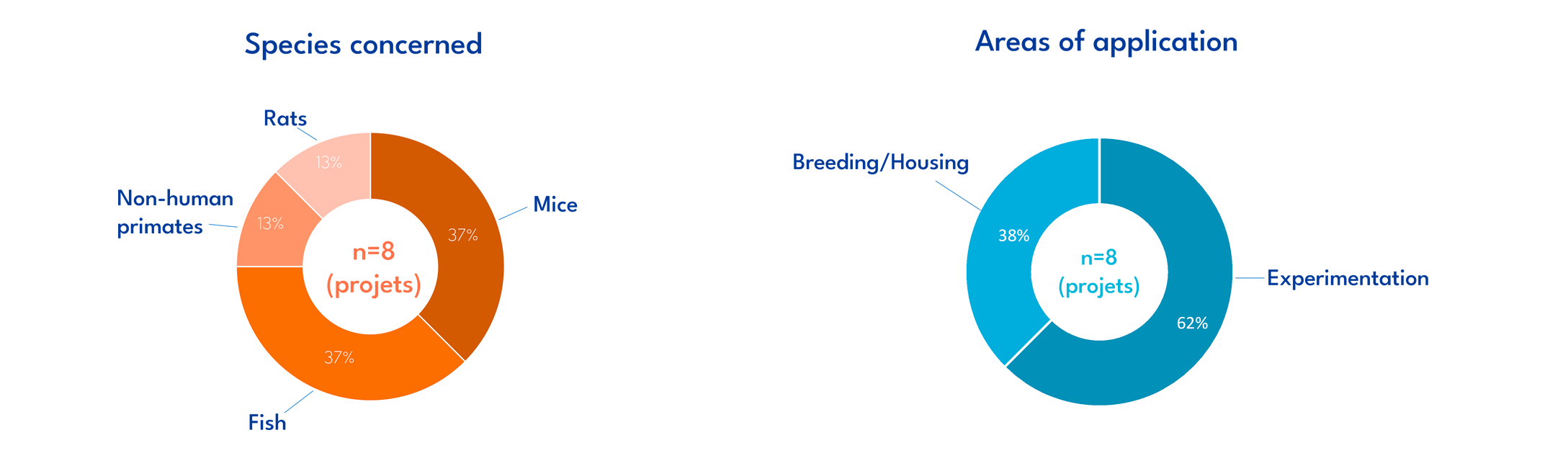
For this call for proposals, the FC3R wanted to promote refinement projects and methods aimed at reducing pain, stress and distress in laboratory animals, thereby improving their welfare. The projects, led by French public bodies, proposed innovative strategies aimed at limiting experimental stress, particularly in severe or moderate procedures. The following were encouraged: optimisation of care, non-invasive techniques, enrichment, monitoring of animals and the sharing of practices across various species. Particular attention was paid to impact indicators, data management and the dissemination of results.
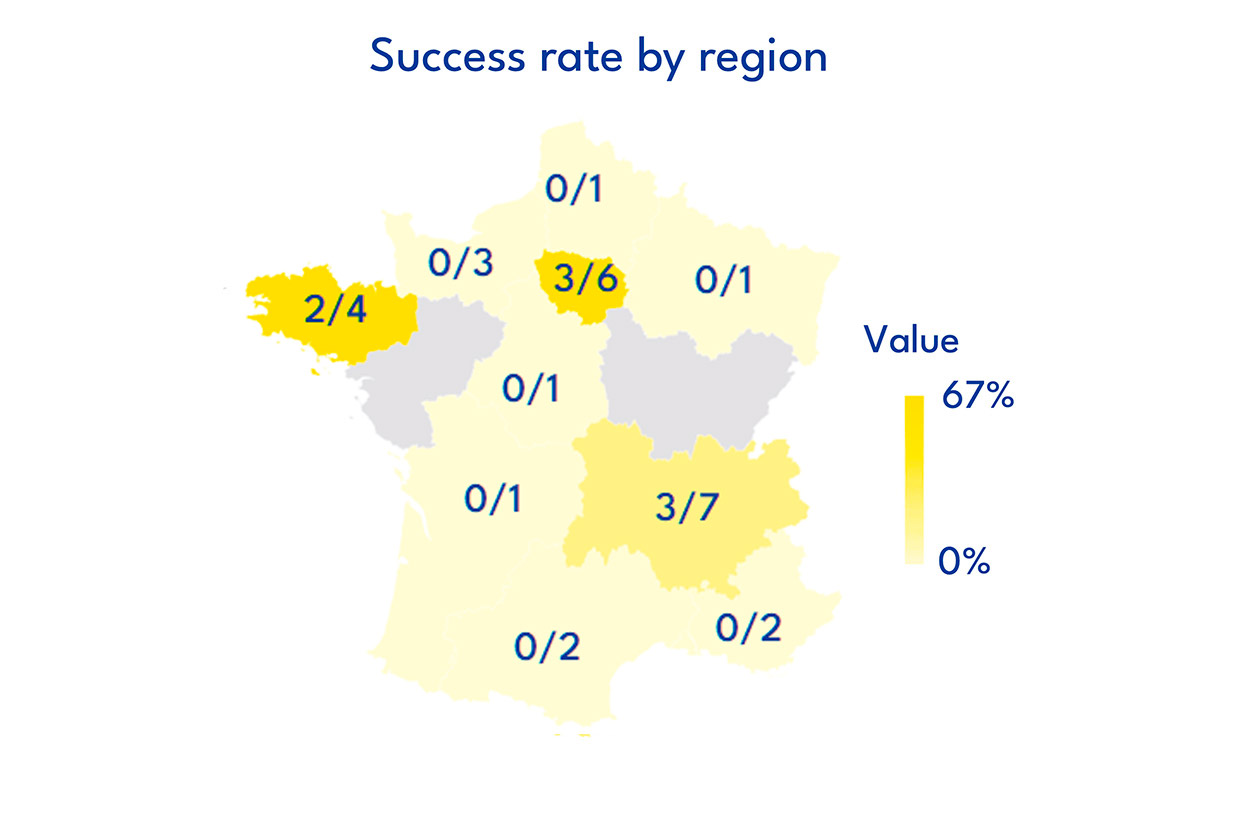
29 projects were submitted to this call for proposals. The Scientific Committee selected 8 for a total funding €237,627 by the FC3R.
AUTOREF : Evaluation of structural, sensory and cognitive enrichment in rhesus macaques.
Abstract:
Appropriate housing combined with an enrichment program is essential to promote the welfare of animals used in scientific procedures. In the proposed project, we aim to evaluate the impact of several modifications to the primate housing and of a new automated and personalized enrichment device on the welfare of rhesus macaques. We will collect physiological and behavioral data in order to quantitatively assess the impact of environmental changes on our animals.
The project is carried out by: Jerome SALLET.
Funding allocated:
The project AUTOREF is allocated a funding of € 28 300.
AWARE : Design of an innovative device and development of an adapted habituation protocol for functional imaging data acquisition in awake rodents..
Abstract:
Instruments for brain imaging in small animals, like rodents, require the head to be still. This requirement is fullfilled by anesthetazing the animals or securing it while awake by using head and body contemption. The stress level induced by comptenption is, nowadays, inefficiently measured in research studies.We propose to design an innovative imaging setup on which the animal can move inside an integrated treadmill, equipped with numerous sensors to monitor the mouse's behavior, temperature, and respiratory rate. This system will be coupled with a personalized habituation protocol for each mouse, as well as precise monitoring of stress levels, thereby improving animal welfare. The device and habituation protocol can be used for multiple neuroimagin approaches, comprising functional MRI.
The project is carried out by: Mélissa GLATIGNY.
Funding allocated:
The project AWARE is allocated a funding of € 29 380.
EDHOSI2HAR : Effect of Daily Handling On Social Isolation In Individually Housed Adult Rats..
Abstract:
Very few studies have examined the effects of individual cage housing in rats from adulthood, generating conflicting data. In particular, these studies, rare in females, very rarely specify whether the rats were handled daily or not during isolation. We therefore propose to study, in two different strains of adult male and female rats, the effect of social isolation, with or without daily handling on the behavior of adult rats. This study will allow us to formulate clear recommendations concerning the limitation of the effects of isolation, thus opening up prospects for implementing improvement methods that can be easily transposed to other research structures, aimed at reducing nuisances in laboratory animals and, consequently, improving their welfare.
The project is carried out by: Colin DERANSART.
Funding allocated:
The project EDHOSI2HAR is allocated a funding of € 30 000.
Fish-Analgesia : Investigating per and post-operative pain management in wild fish telemetry device implantation.
Abstract:
Implanting electronic tags in wild fish helps scientists understand their behavior. These surgeries are common in ecological research, but little is known about how to manage pain in wild fish. As a result, many operations may cause avoidable discomfort because no pain-relief guidelines exist. This project aims to improve the welfare of wild fish by testing several pain-relief medications during surgeries that are already being planned as part of ongoing research programs. After surgery, the fish will be monitored to assess their recovery. These observations will help determine which medications offer the best pain control. The final goal is to create clear, practical recommendations that can be shared openly with the scientific community, ensuring that fish tagging studies are carried out as humanely as possible.
The project is carried out by: Thomas TRANCART.
Funding allocated:
The project Fish-Analgesia is allocated a funding of € 29 981.
InViMice : An innovative non-invasive device for comprehensive functional and dynamic evaluation of muscle properties in mice.
Abstract:
Assessing muscle function is essential for research into neuromuscular diseases (myopathies) and aging. Unfortunately, current methods often require invasive surgeries, which cause pain and stress for animals. Our project develops a breakthrough solution: an innovative ergometer capable of measuring complete muscle performance (force, velocity, endurance) in a fully non-invasive way, using surface stimulation similar to human protocols. By eliminating surgery, we remove pain (Refinement). Furthermore, this gentle method allows for monitoring the same animal throughout its life. This improves the reliability of scientific results while drastically reducing the number of mice required (Reduction). This device thus offers a new ethical standard for biomedical research.
The project is carried out by: Julien GONDIN.
Funding allocated:
The project InViMice is allocated a funding of € 30 000.
STEPPENWOLF : Synergistic refinement Therapy using Exposure to Playbacks of Peer Emissions and Natural interaction With Other Living Fellows.
Abstract:
Laboratory mice need to be housed alone for experiments like brain recordings. This isolation is necessary for their physical safety, but long-term isolation causes severe stress, anxiety, and immune changes — harming both animal welfare and data quality. We propose a simple, low-cost refinement in which isolated mice will be able to watch daily videos and hear recordings of mice social interactions. This “virtual companionship” could significantly reduce stress hormones, restore normal emotional behavior, and decrease neuroinflammation. It will allow to diminish distress and as a consequence the severity degree of the procedure in animals that (for their own safety due to technical constraints) need to be kept in social isolation for a long period of time.
The project is carried out by: Eleni TZAVARA.
Funding allocated:
The project STEPPENWOLF is allocated a funding of € 30 000.
STREAM : Standardized TRanscriptomic method based on Environmental RNA to refine the physiological Monitoring of fish.
Abstract:
This project is developing a new method for monitoring fish physiology without touching them. Fish naturally release small RNA molecules into the water that reflect their physical condition. By analyzing these molecules, it might be possible to determine whether fish are stressed, sick, or affected by environmental factor without any handling or tissue sampling. After an initial proof of feasibility already acquired in our lab, the project now aims to improve the technique to make it more reliable and usable in research facilities and aquaculture settings. It will be tested on two species of scientific and aquaculture interest: European sea bass and rainbow trout. This approach could transform how is assessed the physiological condition of fish by providing a simple, non-invasive, and animal-welfare-friendly tool for both scientific research and aquaculture.
The project is carried out by: David MAZURAIS.
Funding allocated:
The project STREAM is allocated a funding of € 29 966.
ZF-CARE : Zebrafish Surgery — Improving Comfort And Pain Relief.
Abstract:
Pain management protocols for zebrafish procedures are not standardized due to limited and often contradicting information in the literature and between labs. Cardiac surgery is performed in zebrafish to study their unique regenerative capacity, which allows them completely recover from heart injury. This phenomenon is not observed in heart attack human patients. This animal model provides a valuable system to identify the candidates and factors responsible for the regenerative response, which could be activated as therapeutical target in patients. In this project, we will systemically evaluate potential analgesics to identify one that effectively alleviates pain without impairing heart regeneration.
The project is carried out by: Phong NGUYEN.
Funding allocated:
The project ZF-CARE is allocated a funding of € 30 000.
AUTOREF : Evaluation of structural, sensory and cognitive enrichment in rhesus macaques
AWARE : Design of an innovative device and development of an adapted habituation protocol for functional imaging data acquisition in awake rodents.
EDHOSI2HAR : Effect of Daily Handling On Social Isolation In Individually Housed Adult Rats.
Abstract:
Appropriate housing combined with an enrichment program is essential to promote the welfare of animals used in scientific procedures. In the proposed project, we aim to evaluate the impact of several modifications to the primate housing and of a new automated and personalized enrichment device on the welfare of rhesus macaques. We will collect physiological and behavioral data in order to quantitatively assess the impact of environmental changes on our animals.
Project is carried out by: Jerome SALLET
Funding allocated:
The project AUTOREF is allocated a funding of € 28 300.
Abstract:
Instruments for brain imaging in small animals, like rodents, require the head to be still. This requirement is fullfilled by anesthetazing the animals or securing it while awake by using head and body contemption. The stress level induced by comptenption is, nowadays, inefficiently measured in research studies.We propose to design an innovative imaging setup on which the animal can move inside an integrated treadmill, equipped with numerous sensors to monitor the mouse's behavior, temperature, and respiratory rate. This system will be coupled with a personalized habituation protocol for each mouse, as well as precise monitoring of stress levels, thereby improving animal welfare. The device and habituation protocol can be used for multiple neuroimagin approaches, comprising functional MRI.
Project is carried out by: Mélissa GLATIGNY
Funding allocated:
The project AWARE is allocated a funding of € 29 380.
Abstract:
Very few studies have examined the effects of individual cage housing in rats from adulthood, generating conflicting data. In particular, these studies, rare in females, very rarely specify whether the rats were handled daily or not during isolation. We therefore propose to study, in two different strains of adult male and female rats, the effect of social isolation, with or without daily handling on the behavior of adult rats. This study will allow us to formulate clear recommendations concerning the limitation of the effects of isolation, thus opening up prospects for implementing improvement methods that can be easily transposed to other research structures, aimed at reducing nuisances in laboratory animals and, consequently, improving their welfare.
Project is carried out by: Colin DERANSART
Funding allocated:
The project EDHOSI2HAR is allocated a funding of € 30 000.
Fish-Analgesia : Investigating per and post-operative pain management in wild fish telemetry device implantation
InViMice : An innovative non-invasive device for comprehensive functional and dynamic evaluation of muscle properties in mice
STEPPENWOLF : Synergistic refinement Therapy using Exposure to Playbacks of Peer Emissions and Natural interaction With Other Living Fellows
Abstract:
Implanting electronic tags in wild fish helps scientists understand their behavior. These surgeries are common in ecological research, but little is known about how to manage pain in wild fish. As a result, many operations may cause avoidable discomfort because no pain-relief guidelines exist. This project aims to improve the welfare of wild fish by testing several pain-relief medications during surgeries that are already being planned as part of ongoing research programs. After surgery, the fish will be monitored to assess their recovery. These observations will help determine which medications offer the best pain control. The final goal is to create clear, practical recommendations that can be shared openly with the scientific community, ensuring that fish tagging studies are carried out as humanely as possible.
Project is carried out by: Thomas TRANCART
Funding allocated:
The project Fish-Analgesia is allocated a funding of € 29 981.
Abstract:
Assessing muscle function is essential for research into neuromuscular diseases (myopathies) and aging. Unfortunately, current methods often require invasive surgeries, which cause pain and stress for animals. Our project develops a breakthrough solution: an innovative ergometer capable of measuring complete muscle performance (force, velocity, endurance) in a fully non-invasive way, using surface stimulation similar to human protocols. By eliminating surgery, we remove pain (Refinement). Furthermore, this gentle method allows for monitoring the same animal throughout its life. This improves the reliability of scientific results while drastically reducing the number of mice required (Reduction). This device thus offers a new ethical standard for biomedical research.
Project is carried out by: Julien GONDIN
Funding allocated:
The project InViMice is allocated a funding of € 30 000.
Abstract:
Laboratory mice need to be housed alone for experiments like brain recordings. This isolation is necessary for their physical safety, but long-term isolation causes severe stress, anxiety, and immune changes — harming both animal welfare and data quality. We propose a simple, low-cost refinement in which isolated mice will be able to watch daily videos and hear recordings of mice social interactions. This “virtual companionship” could significantly reduce stress hormones, restore normal emotional behavior, and decrease neuroinflammation. It will allow to diminish distress and as a consequence the severity degree of the procedure in animals that (for their own safety due to technical constraints) need to be kept in social isolation for a long period of time.
Project is carried out by: Eleni TZAVARA
Funding allocated:
The project STEPPENWOLF is allocated a funding of € 30 000.
STREAM : Standardized TRanscriptomic method based on Environmental RNA to refine the physiological Monitoring of fish
ZF-CARE : Zebrafish Surgery — Improving Comfort And Pain Relief
Abstract:
This project is developing a new method for monitoring fish physiology without touching them. Fish naturally release small RNA molecules into the water that reflect their physical condition. By analyzing these molecules, it might be possible to determine whether fish are stressed, sick, or affected by environmental factor without any handling or tissue sampling. After an initial proof of feasibility already acquired in our lab, the project now aims to improve the technique to make it more reliable and usable in research facilities and aquaculture settings. It will be tested on two species of scientific and aquaculture interest: European sea bass and rainbow trout. This approach could transform how is assessed the physiological condition of fish by providing a simple, non-invasive, and animal-welfare-friendly tool for both scientific research and aquaculture.
Project is carried out by: David MAZURAIS
Funding allocated:
The project STREAM is allocated a funding of € 29 966.
Abstract:
Pain management protocols for zebrafish procedures are not standardized due to limited and often contradicting information in the literature and between labs. Cardiac surgery is performed in zebrafish to study their unique regenerative capacity, which allows them completely recover from heart injury. This phenomenon is not observed in heart attack human patients. This animal model provides a valuable system to identify the candidates and factors responsible for the regenerative response, which could be activated as therapeutical target in patients. In this project, we will systemically evaluate potential analgesics to identify one that effectively alleviates pain without impairing heart regeneration.
Project is carried out by: Phong NGUYEN
Funding allocated:
The project ZF-CARE is allocated a funding of € 30 000.