

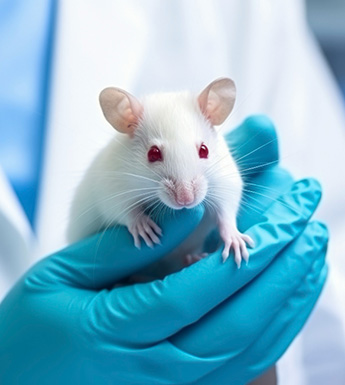
The Contributions of AI to Replacement

AI contributes to the development of in silico models, the analysis of organoids and organs-on-a-chip, and toxicity predictions based on non-animal data. A recent review highlights, in particular, the potential of machine learning and computational toxicology to reduce the use of animals and support the development of NAMs. AI contributes to the development of in silico models, the analysis of organoids and organs-on-a-chip, and toxicity predictions based on non-animal data.
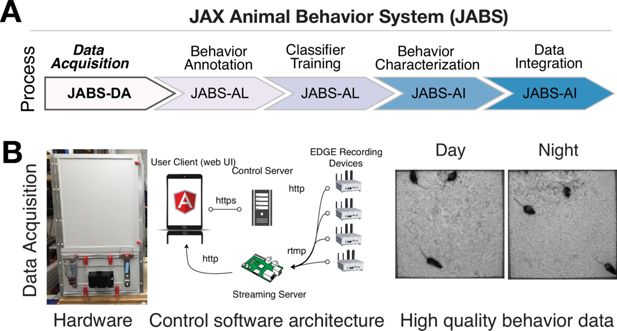
The Jackson Laboratory (JAX), the world-leading referencfe centre for mouse models, developed the JAX Animal Behaviour System (JABS) uses artificial intelligence to automatically and quantitatively analyse mouse behaviour from video recording. Locomotion, posture, gait, grooming and more complex behaviours can thus be characterised with a level of detail that is difficult to achieve through human observation alone. JABS is an open source platform that enables users not only to train and validate, but also to share robust behavioural analysis models that have already been trained.
Beyond JABS, this technology illustrates several possible applications of artificial intelligence (AI) in support of the 3Rs, to which two cross-cutting priorities: the Robustness and Reproducibility of experimental results.
Reduction — Greater sensitivity with fewer animals
The JAX is beginning to apply JABS to disease models such as Rett syndrome, a rare disorder affecting the development of the central nervous system. A research team is looking for behavioural characteristics that can be used to monitor the onset of the disease and the response to treatment.
According to preliminary results reported by The JAX , a human observer might need to examine around 50 mice to identify a desease-related behavioural feature, whereas JABS could detect it using only 10 to 15 animals. The system would also detect certain differences as early as 3 weeks of age, whereas these only become apparent through human observation at around 8 weeks.
The potential applications extended beyond this example. In a 2026 eLife article, the authors describe models trained on behavioral data obtained from nearly 1,000 animals capable of detecting signs of pain or impaired general health. Once trained, these models can then be applied to new videos as well as previously recorded footage, to extracting additional information without the need to use new animals — a direct application of the of Reduction principle.
Refinement — Continuous monitoring to detect changes and intervene earlier
Automation also makes it possible to observe what humans cannot prealistically monitor continuously. JABS is primarily a high-resolution phenotyping tool, but its system can record mice both day and night over several days. This capability is particularly useful in mice, which are mainly active during the dark phase, whereas experiments and observations are most often carried out during the daytime, whken mice are in their resting phase. Automated home-cage monitoring, evaluated as part of the European COST TEATIME action, extends this approach. By following animals in their familiar environment, with fewer disturbances caused by human,. it can provide a more complete picture of spontaneous behaviors across the entire day/night cycle, including grooming, nest-building, burrowing or the spatial organisation of the cage.
A multicentre study published in 2026 showed that continuous monitoring of in-cage activity combined with machine learning could identify animals in distress 3 to 6 days before verifiable clinical signs or death were detected during conventional checks. The aim is therefore no longer simply to recognise that a humane endpoint has been reached – often on the basis of already evident signs of morbidity – but to identify the changes that precede it, in order to support earlier decision-making.
These signals could become intermediate intervention points: stepping up monitoring, administering analgesic or pain-relieving treatment, providing supportive care or adapting a procedure before severe signs develop. Where the course of the condition cannot be reversed, they could also help to define early and objective cut-off points.
GrimACE demonstrates that this approach is already becoming a reality: this system combines automated analysis of the Mouse Grimace Scale, posture and activity to monitor post-operative pain and compare different analgesic protocols.
In the long term, monitoring could become multimodal by combining behavioural analysis with other spontaneous indicators such as facial expressions, food intake, drinking, nest-building or ultrasonic vocalisations. Resources such as MouseTube already enable recordings and annotations to be shared. Rather than searching a a single marker of pain, the aim would be to combine multiple signals to monitor changes in the animal’s overall condition more comprehensively.
Fourth Rs — Robustness and Reproducibility
One of the issues raised by the authors of JABS is the variability inherent in human observation. The same posture or gait abnormality may be interpreted differently depending on an observer’s training, experience or habits. Automated and standardised measurements can limit this subjectivity and facilitate the comparison of results between research teams.
Robustness also depends on sharing ressources and expertise. Not all laboratories have specialists in behaviour or machine learning, nor do they have the necessary equipment, computing power or datastorage capacities. A coordinated organisation could enable experimental teams to produce standardised data, whilst specialists in behaviour, animal welfare and AI annotate it, train the models and validate them.
Once sufficiently robust, these models could then be shared and reused, as JABS already allows. This approach prevents each laboratory from repeating the same work and can help to harmonise practices, provided that the models are revalidated when applied to new strains, different age groups or experimental conditions – a precaution explicitly highlighted by the authors of JABS.